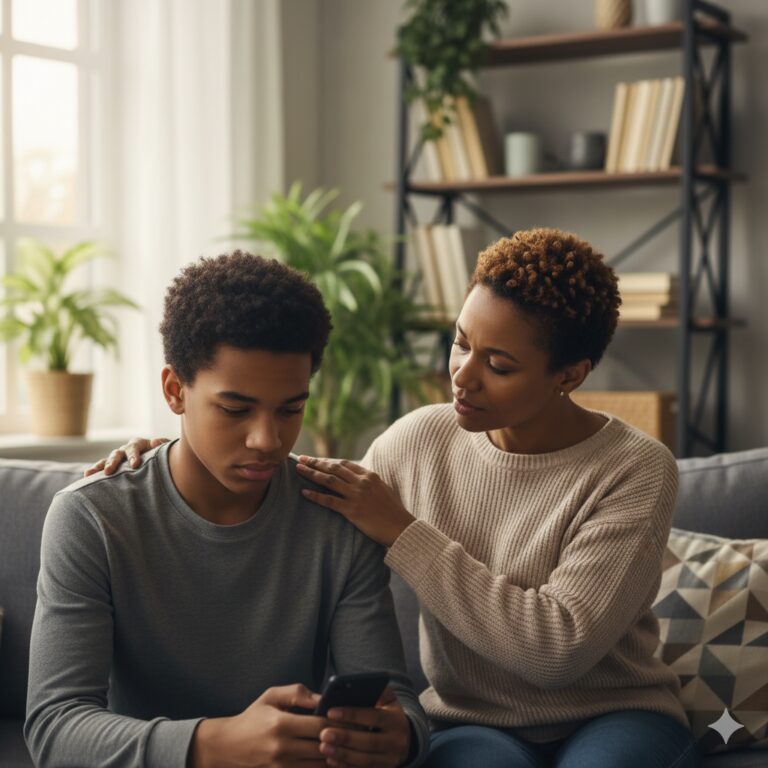

When Your Child Struggles to Make Eye Contact – Ascension Counseling & Therapy
Avoiding eye contact doesn’t mean your child is broken, behind, or destined to struggle. Kids communicate in dozens of ways—through play, movement, gestures, storytelling, and silence—and eye contact is just one of those ways. This guide will help you understand what’s typical, what may need support, and how therapy can strengthen your child’s confidence and connection—without forcing them to be someone they’re not.
Noticing your child avoid eye contact can bring up worry, questions, and a lot of “what ifs.” Maybe your preschooler looks away during greetings, or your teen keeps their hood up and eyes down. While eye contact is one way kids connect, it’s only a single piece of the social skills puzzle. Many children and adolescents develop this skill at their own pace, and some express connection differently based on temperament, culture, neurodiversity, or past experiences.
If you’re in Cleveland or Columbus, Ohio; Charlotte, North Carolina; or Detroit, Michigan—and also in nearby cities like Dayton OH, Tampa FL, Miami FL, Orlando FL, Gainesville FL, and Jacksonville FL—know that help is available. Counseling for children and therapy for teens can improve confidence, communication, and the ease of everyday interactions. If you’ve been searching for “adolescent therapy near me” or “child counseling services,” this guide will help you understand what’s typical, what might be a sign of a deeper challenge, and what effective support can look like.
Developmental Norms
Every child’s social development unfolds on a spectrum. Here’s a general sense of what we often see:
-
Infants and toddlers: Brief moments of eye contact during feeding or play, with frequent look-aways to self-regulate. Alternating gaze between a caregiver and an object (joint attention) begins to emerge around 9–15 months.
-
Preschoolers: More frequent eye contact during turn-taking, story time, and simple conversations, though still variable when excited, tired, or overwhelmed.
-
Elementary school children: Improved ability to use eye contact to show interest, ask questions, or read social cues. Some kids remain shy or look away when thinking hard.
-
Adolescents: Increasingly strategic use of eye contact, often influenced by peer culture, self-consciousness, and context (e.g., class presentations versus casual chats).
It’s also essential to consider culture and neurodiversity. In some families and communities, prolonged eye contact can be considered disrespectful. For many neurodivergent kids and teens, direct gaze can be physically uncomfortable or distracting. In these cases, we value connection over conformity; alternatives to eye contact (like looking toward a person’s shoulder or using active listening cues) can be equally respectful and effective.
Possible Causes
When reduced eye contact becomes a pattern that impacts friendships, classroom engagement, or family communication, consider the following possibilities. These are not diagnoses, but common themes we see in child development and adolescent therapy:
-
Anxiety: Social anxiety and performance anxiety often lead to gaze avoidance. Kids look away to manage fear, worry about judgment, or racing thoughts.
-
Autism signs and social communication differences: Some autistic children and teens may find eye contact uncomfortable and may show differences in back-and-forth conversation, play, and perspective-taking. Many also have wonderful strengths—deep interests, honesty, and unique problem-solving—that we celebrate and support.
-
Attention and executive functioning differences: Children with ADHD may look away to focus or because their minds move quickly between ideas. Reduced eye contact here can reflect effort, not disinterest.
-
Sensory processing differences: Bright lights, noisy rooms, or visual overload can make eye contact feel overwhelming.
-
Trauma or stress: After difficult experiences (bullying, family transitions, loss), kids may protect themselves by avoiding direct gaze.
-
Depression: Teens with low mood may withdraw, which can show up as fewer social bids and less eye contact.
-
Language or learning challenges: When a child is working hard to understand or express language, they may break eye contact to concentrate.
-
Cultural and familial norms: Expectations about gaze vary; what looks like avoidance to one person may be respect in another context.
-
Screen fatigue and social burn-out: Long days online or jam-packed schedules can reduce bandwidth for social engagement.
These patterns often coexist with other challenges like school stress, family transitions, behavioral concerns, or trauma. A thoughtful assessment can help clarify what’s driving the behavior and, more importantly, which supports will help.
Therapy Strategies That Help
High-quality counseling for children and therapy for teens is not about forcing eye contact—it’s about teaching comfortable, authentic connection. Evidence-based approaches include:
Play-Based and Developmental Therapies
-
Child-centered play therapy builds trust and emotional language for younger kids.
-
Parent–Child Interaction Therapy (PCIT) strengthens positive attention, co-regulation, and cooperative behavior in structured, coached sessions.
-
Social skills groups provide gentle practice reading cues, taking turns, and using flexible communication—eye contact becomes one skill among many.
Cognitive and Behavioral Therapies
-
Cognitive Behavioral Therapy (CBT) helps kids challenge anxious thoughts, practice exposure in safe steps, and learn practical tools like “look-listen-answer” or “three-second glance” to reduce pressure.
-
Acceptance and Commitment Therapy (ACT) supports teens in aligning behavior with values (being kind, curious, brave) rather than rules about “perfect” eye contact.
-
Dialectical Behavior Therapy (DBT) skills for teens improve emotion regulation, distress tolerance, and interpersonal effectiveness.
Trauma-Informed and Sensory-Aware Care
-
Trauma-focused CBT and other trauma-informed approaches reduce hypervigilance and shame that can inhibit social engagement.
-
Occupational therapy consults can address sensory sensitivities that make classrooms or busy spaces overwhelming.
-
Speech-language therapy can support social-pragmatic language for kids who need help with conversation flow and perspective-taking.
School Collaboration
-
Coordinating with teachers and counselors can add accommodations (preferential seating, visual supports, predictable routines) that make participation easier without pressuring eye gaze.
For families searching “adolescent therapy near me,” look for clinicians who are neurodiversity-affirming and culturally responsive. The goal isn’t to “fix” who your child is; it’s to expand comfortable ways of connecting.
Understanding the Unique Needs of Children and Adolescents
Therapy with young people looks different from adult counseling. Effective child counseling services build around:
-
Relationship first: Safety and trust are the foundation for trying new skills.
-
Developmental fit: Sessions adapt to age, attention span, and learning style—using play, art, movement, or structured talk.
-
Collaboration with caregivers: Parents and guardians are partners, learning strategies to support progress at home.
-
Respect for autonomy: With teens, we balance confidentiality with caregiver updates and safety planning.
-
Strengths-based lens: We highlight what’s going well to fuel growth.
Parent Techniques You Can Use at Home
-
Model, don’t mandate: Use warm, brief eye contact yourself. When your child speaks, turn your body toward them, nod, and paraphrase what you heard.
-
Offer alternatives: Teach “look to the bridge of the nose,” “look at the shoulder,” or “look at the toy/book” while still listening. Connection beats direct gaze.
-
Reduce pressure: Avoid “look at me” commands. Instead try, “I want to hear you—tell me more,” or “Let’s check in with a thumbs-up/down if talking feels hard.”
-
Praise specifics: “I noticed you looked toward Grandma when you answered—great job sharing your idea.”
-
Practice with play: Role-play greetings with stuffed animals, or try “two-second glance” games during board games.
-
Build regulation: Sleep, movement, and predictable routines make social moments easier. Practice calm breathing or grounding before social settings.
-
Balance screens: Use tech mindfully with breaks to reset eyes and attention.
-
Team with school: Ask teachers how your child engages best; request simple supports if needed.
When to Seek Evaluation
Consider a professional assessment if you notice several of the following over time:
-
Persistent avoidance of social interaction or extreme distress with eye contact across settings
-
Difficulty with back-and-forth conversation, pretend play, or understanding social cues
-
Significant anxiety, panic, or school refusal
-
Changes in mood, withdrawal, or loss of interest in friends and activities
-
Developmental delays in language or motor skills
-
Impact on grades, behavior, or family life
An evaluation can include hearing/vision checks, developmental screening, and, when appropriate, autism-specific assessments or learning evaluations. From there, counseling for children or therapy for teens can be tailored to your child’s needs, whether that’s anxiety support, social communication coaching, or trauma-informed care.
Benefits of Counseling for Young People
-
Increased confidence and comfort in social situations
-
Reduced anxiety and improved mood
-
Stronger friendships and communication skills
-
Better classroom participation and school performance
-
Improved family relationships and cooperation
-
Tools for coping with stress, transitions, and big emotions
-
Validation and empowerment for neurodivergent kids and teens
Local Counseling Availability
If you’re looking for child counseling services or adolescent therapy near me, Ascension Counseling supports families across multiple cities with in-person and telehealth options:
-
Ohio: Columbus OH, Cleveland OH, and Dayton OH—supporting families in urban, suburban, and campus communities.
-
Michigan: Detroit MI—helping kids and teens navigate school stress, family transitions, and social anxiety.
-
North Carolina: Charlotte NC—serving diverse neighborhoods with culturally responsive care.
-
Florida: Tampa FL, Miami FL, Orlando FL, Gainesville FL, Jacksonville FL—providing accessible, high-quality counseling for children and therapy for teens throughout the state.
Whether you live in Columbus or Cleveland, Charlotte or Detroit, or any of the Florida cities listed above, we’ll help you find a therapist who understands your child’s developmental stage, unique strengths, and goals.
Conclusion
Eye contact is just one way kids and teens connect—and it doesn’t define their empathy, curiosity, or potential. If your child or adolescent looks away, it may be a normal part of development, a sign of anxiety, sensory differences, or simply a cultural or personal preference. The key is to watch the bigger picture: Are they learning, relating, and growing? If certain challenges—anxiety, depression, school stress, family transitions, behavioral concerns, or trauma—are getting in the way, therapy can help.
Counseling for children and therapy for teens gives young people practical tools and a safe space to practice them. With the right support, your child can feel calmer, more connected, and more confident—even if direct eye contact isn’t their go-to. If you’re in Cleveland, Columbus, Charlotte, Detroit, Dayton, or in Florida cities like Tampa, Miami, Orlando, Gainesville, and Jacksonville, Ascension Counseling is here to help with compassionate, evidence-based care.
Ready to take the next step? You can book an appointment at https://ascensionohio.mytheranest.com/appointments/new, or reach us at [email protected]. Feel free to call (216) 455-7161 or text (216) 455-7161.